
Imagine taking your car to a mechanic because it won’t start.
You wouldn’t expect the mechanic to replace random parts until the problem disappears. Instead, they diagnose the issue first.
Electrical systems work the same way.
Many electrical problems have several possible causes, and replacing the wrong part can waste time and money. That’s why professional troubleshooting is one of the most valuable services an electrician provides.
Not Every Problem Has One Cause
Example:
“My kitchen outlets stopped working.”
Possible causes:
- Tripped GFCI
- Tripped breaker
- Failed receptacle
- Open neutral
- Loose splice
- Burned connection
- Damaged wiring
- Utility problem
Every one of those symptoms looks the same to the homeowner.
What Happens During Troubleshooting?
These are just a few of the things that an experienced electrician will do in their troubleshooting process:
- Listening to the homeowner
- Visual inspection
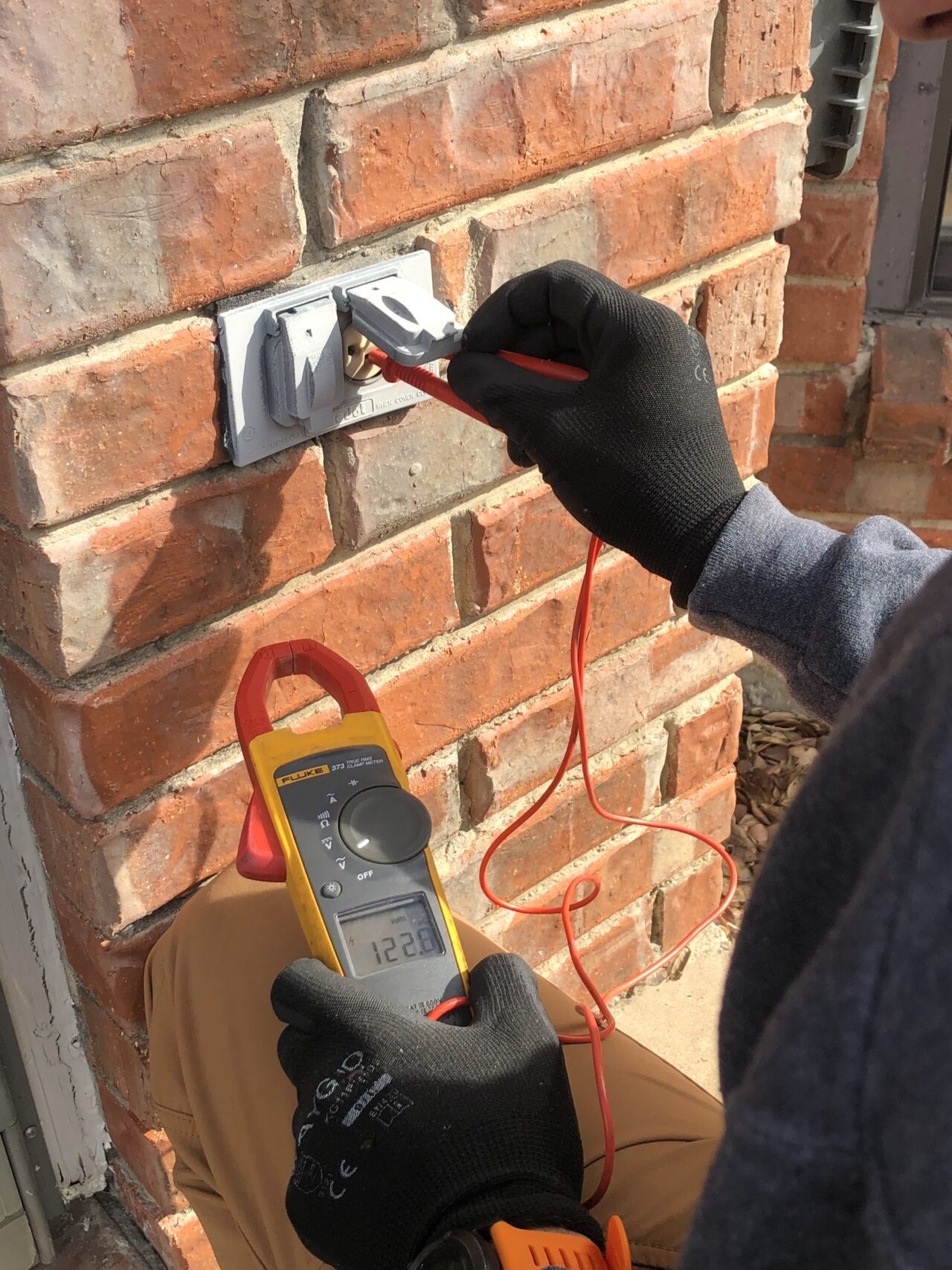
- Testing voltage
- Checking continuity
- Isolating circuits
- Inspecting the panel
- Looking for loose connections
- Identifying the root cause
Why Can’t You Quote the Repair First?
Example:
Imagine calling a doctor and saying:
“My stomach hurts.”
The doctor can’t quote surgery over the phone.
They diagnose first.
Electricians do the same.
You’re Paying for More Than Time—You’re Paying for Experience
When an electrician arrives to troubleshoot a problem, it may look like they’re only spending 30 or 60 minutes testing a few outlets or opening your electrical panel. But what you’re really paying for isn’t the amount of time they’re standing in your home—you’re paying for the years of knowledge that allow them to find the problem quickly and safely.
Think of it like visiting a doctor. A doctor may diagnose an illness in just a few minutes, but that diagnosis is only possible because of years of education, training, and experience. Electricians are no different.
Every electrical problem leaves clues. A tripped breaker, flickering lights, a warm outlet, or a GFCI that won’t reset may all seem like separate problems, but an experienced electrician knows they can all point to dozens of possible causes. Knowing which tests to perform—and in what order—can mean the difference between finding the problem in 20 minutes or spending an entire day replacing parts that were never faulty.
Professional troubleshooting requires:
- Years of hands-on experience diagnosing electrical systems.
- Knowledge of the National Electrical Code (NEC) and safe work practices.
- Thousands of dollars in specialized testing equipment.
- The ability to interpret test results correctly.
- An understanding of how different electrical systems interact throughout your home.
An experienced electrician doesn’t simply replace parts until the problem goes away. They follow a logical process that isolates the root cause, helping prevent unnecessary repairs and repeat service calls.
In some cases, the value isn’t measured by how long the diagnosis takes—it’s measured by how much time, money, and frustration it saves.
A homeowner may see an electrician tighten one loose connection or replace a single breaker and wonder why the repair seemed so simple. The reality is that identifying which connection was loose or which breaker had failed is often the difficult part. Anyone can replace a breaker; knowing with confidence that it’s the correct breaker to replace is what experience provides.
When you hire a qualified residential electrician, you’re investing in confidence that the problem will be diagnosed correctly, repaired safely, and fixed right the first time.
Could the Repair Be Simple?
Absolutely.
Sometimes troubleshooting finds:
- Reset GFCI
- Tighten one wire
- Replace breaker
Other times it finds:
- Melted wire
- Open neutral
- Damaged panel
- Hidden junction box
You don’t know until it’s tested.
What Happens After the Diagnosis?
After the customer approves any sort of troubleshooting and the electrician has found the problem, they will then approach the customer. Showing what was the cause and what the remedy should be.
Conclusion
Troubleshooting isn’t an extra charge.
It’s what prevents guessing.
A proper diagnosis saves money, avoids unnecessary repairs, and helps ensure your home’s electrical system is repaired safely the first time.